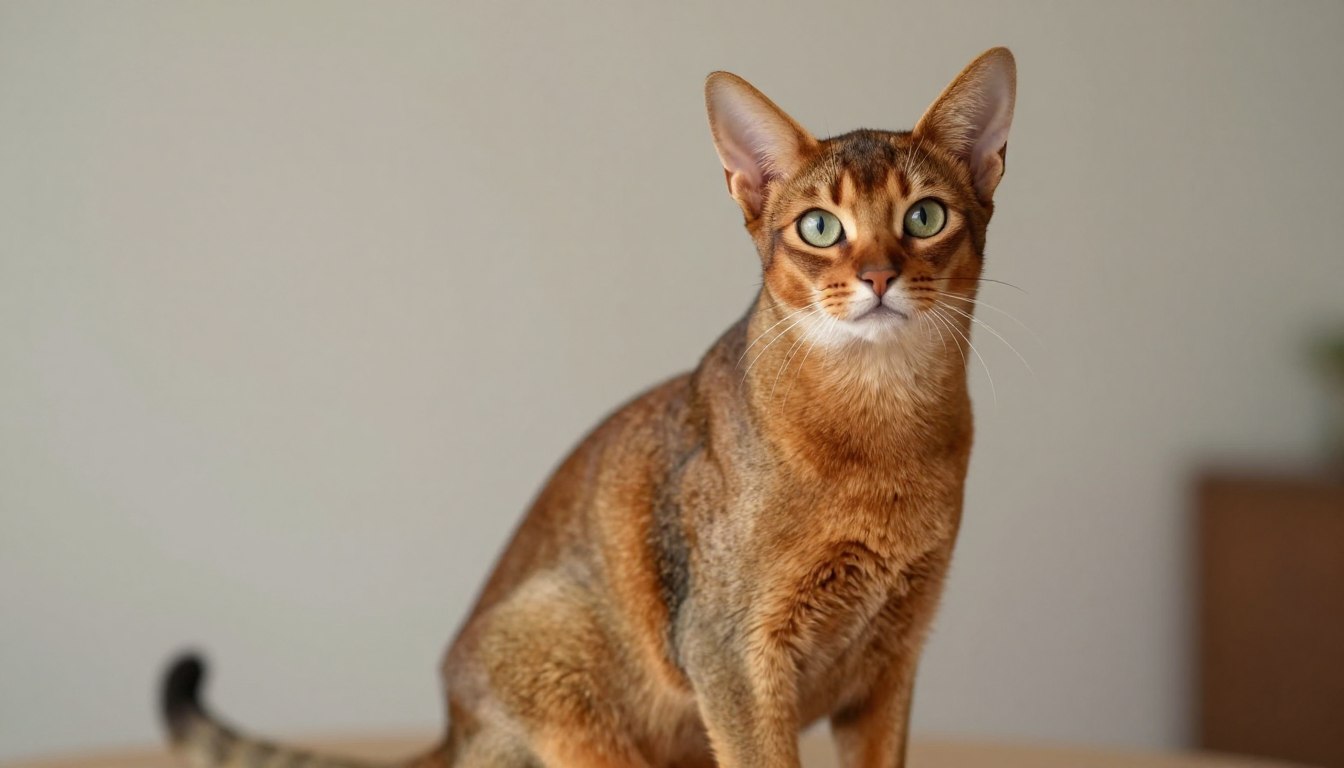
The Abyssinian cat captivates owners with its striking appearance and energetic personality. This breed stands out among cat breeds with its unique ticked coat pattern and athletic build. If you’re considering adding an Abyssinian to your family, understanding their distinctive traits helps ensure a perfect match.
These cats carry themselves with grace and confidence. Their playful nature and high intelligence make them engaging companions. Unlike more sedentary breeds, Abyssinians thrive on activity and interaction with their owners.
This comprehensive guide explores everything you need to know about Abyssinian cats. From their mysterious origins to daily care requirements, you’ll discover what makes this breed truly special.
History and Origins of the Abyssinian Breed
The Abyssinian cat ranks among one oldest recognized cat breeds. Despite its name suggesting Ethiopian origins, genetic research reveals a more complex ancestry. The breed’s true birthplace remains debated among feline historians and geneticists.
Early records show these cats appearing in British cat shows during the 1870s. A cat named Zula was exhibited in 1871 at the Crystal Palace. This marked one of the first documented appearances of the Abyssinian breed in competitive showing.
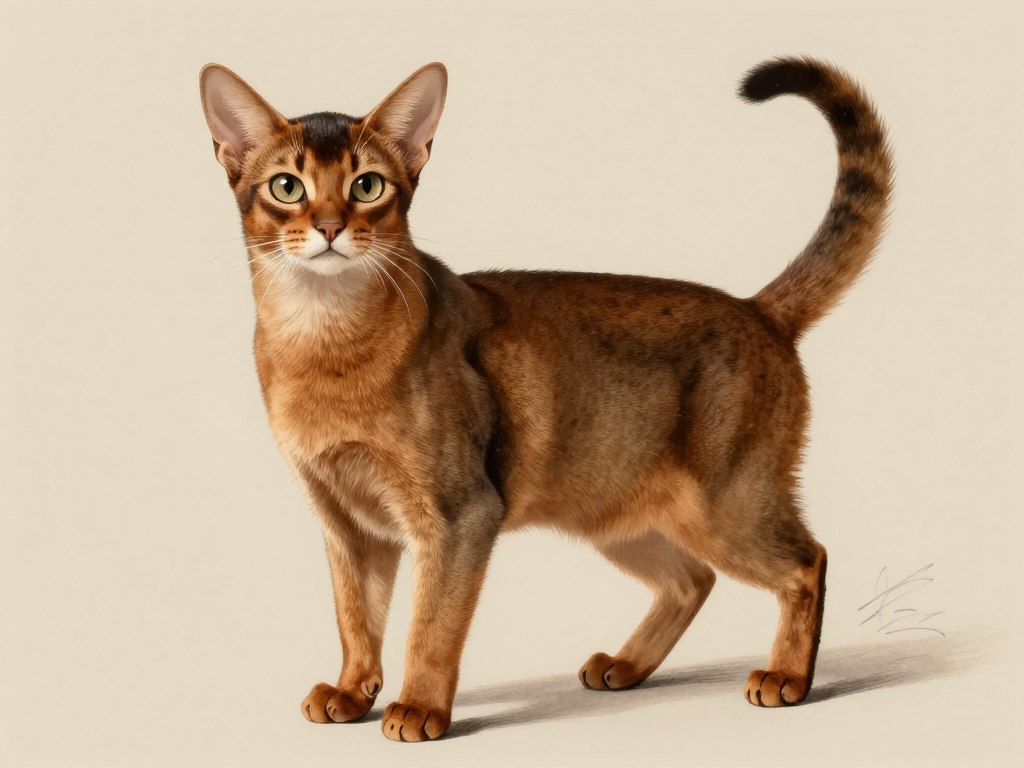
Genetic studies indicate coastal regions of the Indian Ocean contributed to the breed’s development. The ticked coat pattern likely originated from cats in these areas. British breeders refined these characteristics through selective breeding programs.
Development in Modern Times
The Abyssinian breed nearly disappeared during World War II. Dedicated breeders worked tirelessly to preserve the line. American breeding programs helped restore population numbers in the 1960s and 1970s.
Recognition came from major cat registries worldwide. The Cat Fanciers’ Association accepted Abyssinians in its championship class. Today, the breed maintains strong popularity across multiple continents.
Connect With Abyssinian Breed Experts
Looking to learn more about Abyssinian lineage and breed standards? Connect with certified breeders who specialize in preserving authentic Abyssinian characteristics.
The Abyssinian Name Mystery
The connection to Abyssinia, now Ethiopia, may be purely coincidental. Some historians believe British soldiers brought these cats from the region. Others suggest the name served marketing purposes for early breeders.
Modern DNA analysis shows genetic markers from Southeast Asian cats. This evidence contradicts the African origin theory. The breed likely developed from diverse feline populations across several regions.
Physical Appearance and Distinctive Features
Abyssinian cats possess a medium-sized, muscular body that exudes athleticism. These cats typically weigh between seven and ten pounds. Males tend toward the larger end of this range compared to females.
The Remarkable Ticked Coat
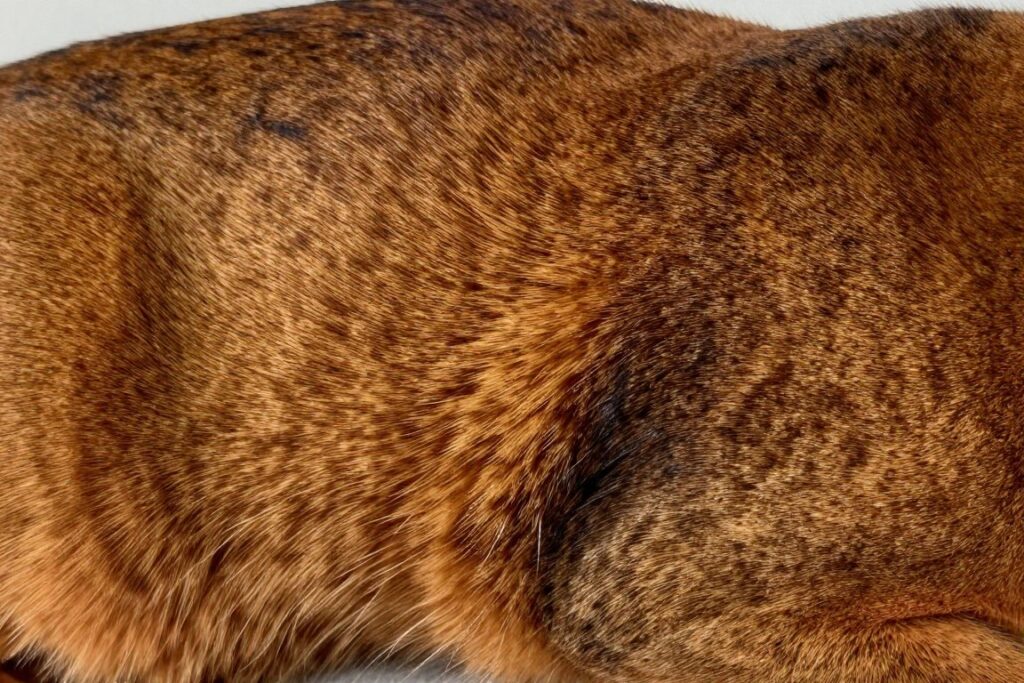
The coat represents the breed’s most distinctive feature. Each individual hair displays multiple color bands creating a shimmering effect. This ticking pattern gives the fur depth and richness unmatched by other breeds.
Four primary coat colors exist in the Abyssinian breed. Ruddy presents warm reddish-brown tones with black ticking. Red features cinnamon hues with chocolate-brown bands. Blue shows soft gray coloring with darker gray ticking.
Fawn displays a pale cream base with deeper cream bands. All colors should appear even throughout the body. The coat lies close to the skin without excessive length.
Head and Facial Structure
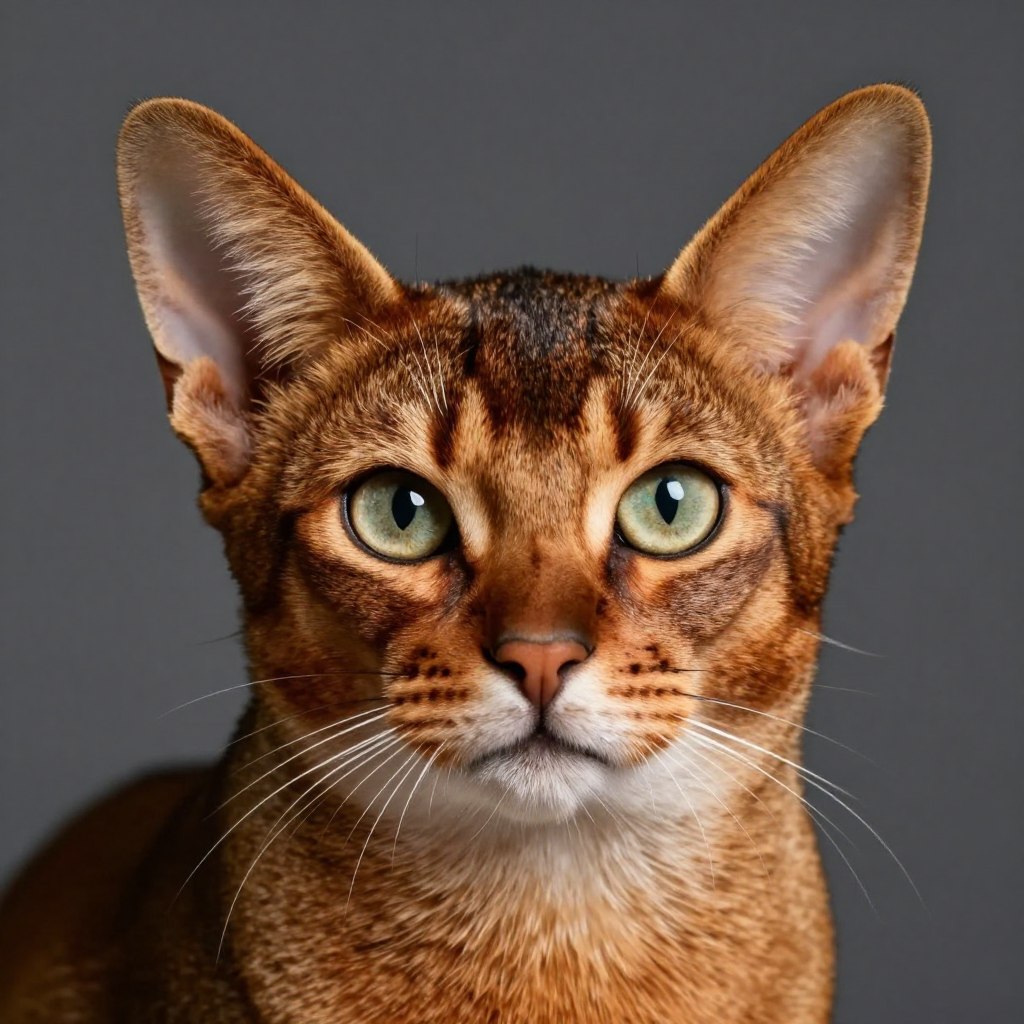
The head forms a modified wedge shape. Large, almond-shaped eyes dominate the face with brilliant gold or green coloring. Eye color intensity varies among individual cats.
Ears stand prominently erect and alert. These large ears sit wide apart on the skull. Many cats display ear tufts at the tips, adding to their wild appearance.
Body Structure and Movement
The body exhibits a lithe, muscular build. Long legs support the torso with fine-boned elegance. The tail extends proportionally to body length, tapering to a point.
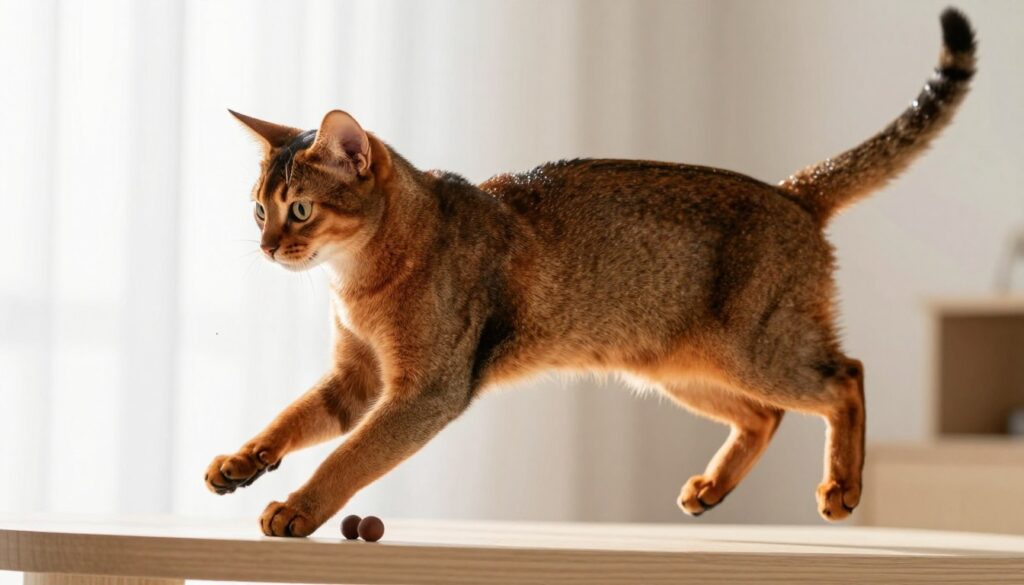
These cats move with exceptional grace and agility. Their athletic build enables impressive jumping abilities. Abyssinians easily reach high perches and navigate vertical spaces.
Distinguishing Breed Standards
Show-quality Abyssinians meet specific appearance criteria. The ticking must extend evenly across the body without patches. The darker dorsal stripe runs along the spine from head to tail tip.
Face markings include distinct lines around the eyes. These markings resemble natural eye liner. The chin and throat display lighter coloring than the main body coat.
Personality, Temperament, and Behavioral Traits
Abyssinian cats demonstrate remarkable intelligence and curiosity. These traits define their daily interactions with family members. Owners describe them as perpetually active and engaged with their surroundings.
Activity Level and Energy
High energy levels characterize the Abyssinian breed. These cats require substantial daily activity to remain content. They excel at climbing, jumping, and exploring elevated surfaces throughout the home.
Interactive play sessions satisfy their need for stimulation. Puzzle toys and treat-dispensing games engage their problem-solving abilities. Without adequate activity, Abyssinians may develop destructive behaviors.
Many owners compare their energy to dogs rather than typical cats. They follow family members from room to room. Their constant motion and investigation keep households lively.
Social Behavior and Bonding
Strong bonds form between Abyssinians and their owners. These cats thrive on human interaction and attention. They prefer being involved in daily household activities rather than observing from afar.
The breed generally tolerates other pets well. Proper introductions help ensure peaceful multi-pet households. Some Abyssinians even enjoy the company of dogs when socialized appropriately.
With Children
Abyssinian cats typically interact well with respectful children. Their playful nature matches energetic kids. Supervision ensures gentle handling from younger children.
Teaching children proper cat interaction prevents stress. These cats appreciate gentle play without rough handling. Their patience level remains moderate compared to other breeds.
With Other Pets
Multi-pet households often succeed with Abyssinians. They adapt to living with other cats when introduced gradually. Their confident personality helps them establish household dynamics.
Dog companions can work well with proper matching. Active, cat-friendly dogs make suitable companions. Both pets benefit from structured introduction periods.
Vocal Communication
Abyssinians communicate through soft, quiet vocalizations. They rarely produce loud meowing compared to breeds like Siamese cats. Their gentle trills and chirps convey various needs and emotions.
Body language plays a significant role in their communication. Tail position, ear orientation, and eye contact express their feelings. Observant owners quickly learn to read these signals.
Intelligence and Trainability
Exceptional intelligence makes Abyssinians highly trainable. They quickly learn tricks, commands, and household rules. Many owners successfully teach them to fetch, sit, and come when called.
Clicker training works particularly well with this breed. Positive reinforcement methods yield best results. Their food motivation supports training efforts effectively.
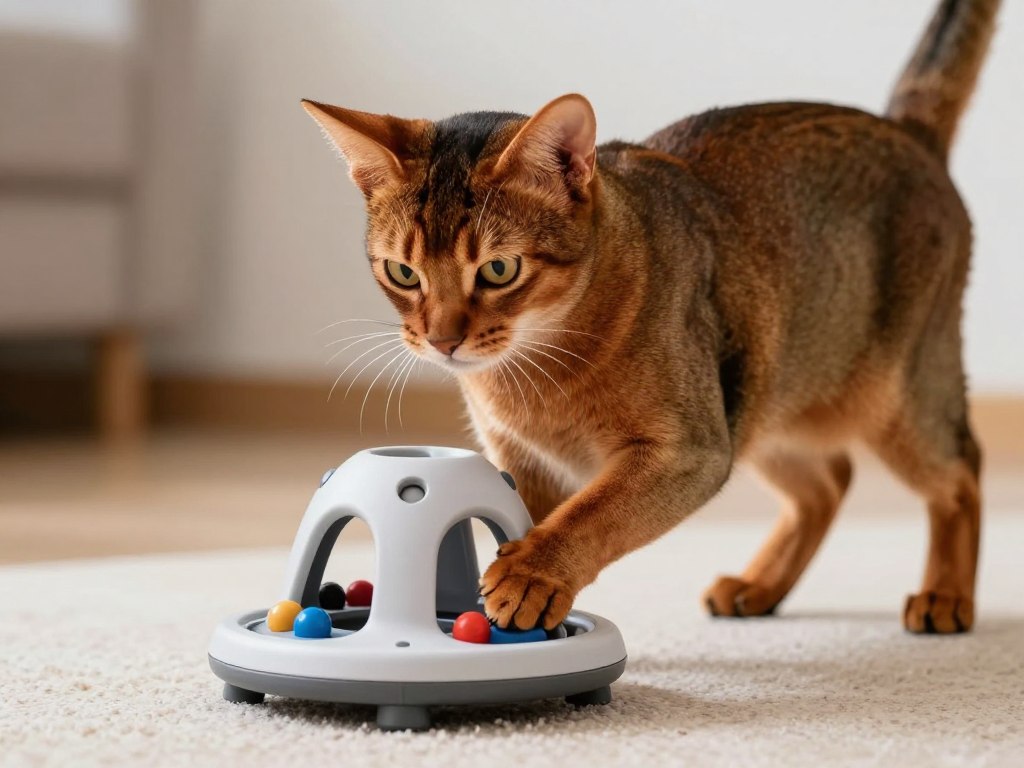
Problem-solving abilities emerge during play and daily life. These cats figure out how to open cabinets and doors. Childproof latches may become necessary for determined individuals.
Essential Care Requirements for Abyssinian Cats
Proper care ensures Abyssinian cats live long, healthy lives. Understanding their specific needs helps owners provide optimal conditions. These cats require attention to grooming, nutrition, and environmental enrichment.
Grooming Needs and Coat Maintenance
The short, fine coat requires minimal grooming effort. Weekly brushing removes loose hair and distributes natural oils. A rubber grooming mitt or soft bristle brush works effectively.
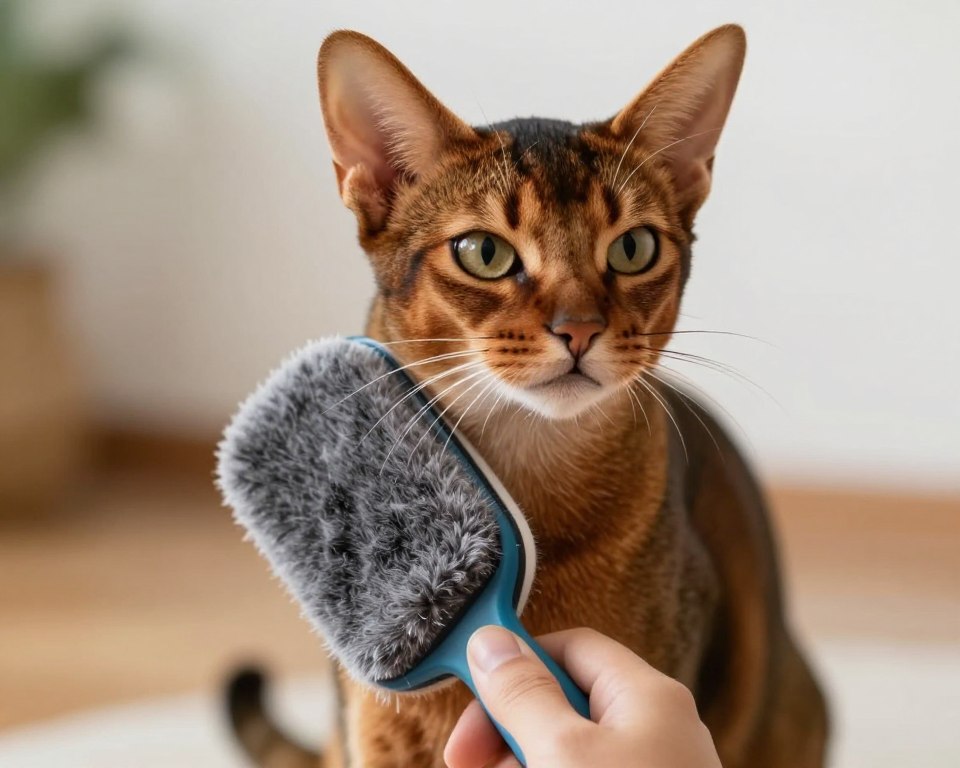
Shedding remains moderate throughout the year. Seasonal changes may increase hair loss slightly. Regular grooming sessions minimize loose hair around the home.
Nail trimming should occur every two to three weeks. Start this routine early with kittens for easier acceptance. Provide scratching posts to maintain natural nail wear between trimmings.
Dental Care Importance
Daily tooth brushing prevents dental disease in Abyssinian cats. Use cat-specific toothpaste and a soft brush. Start dental care routines early for better compliance.
Dental treats and toys supplement brushing routines. Annual veterinary dental checkups identify potential problems. Professional cleanings may become necessary as cats age.
Nutritional Requirements
High-quality cat food supports Abyssinian health and energy. Protein-rich diets match their active metabolism. Look for foods listing real meat as the primary ingredient.
Portion control prevents obesity despite their active nature. Follow feeding guidelines based on age, weight, and activity level. Divide daily food portions into multiple small meals.
Protein Needs
Animal-based protein should comprise the diet foundation. Cats require specific amino acids found in meat sources. Quality protein supports muscle maintenance and energy.
Hydration
Fresh water availability remains crucial for health. Some Abyssinians prefer running water fountains. Monitor water intake to ensure adequate hydration levels.
Treats and Supplements
Limit treats to ten percent of daily calories. Choose healthy options without excessive fillers. Consult veterinarians before adding supplements to the diet.
Wet food provides additional moisture in the diet. This benefits urinary tract health significantly. Mix wet and dry food for variety and nutritional balance.
Exercise and Environmental Enrichment
Abyssinians need substantial physical and mental stimulation. Provide tall cat trees for climbing and perching. Window perches allow them to observe outdoor activity safely.
Interactive play sessions should occur multiple times daily. Feather wands, laser pointers, and small toys engage their hunting instincts. Rotate toys regularly to maintain interest.
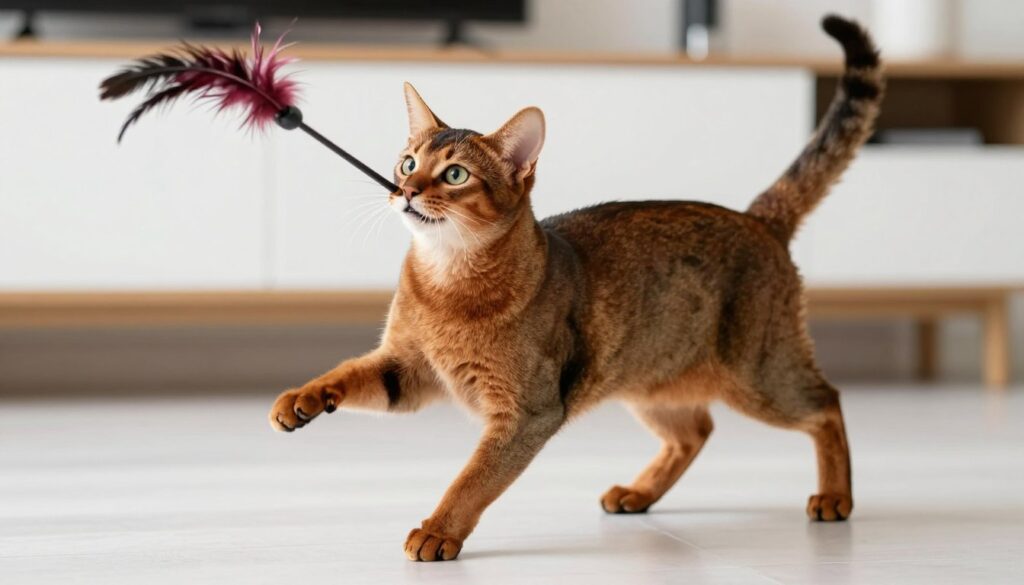
Puzzle feeders slow eating while providing mental challenges. These devices encourage natural foraging behaviors. They help prevent boredom during alone time.
Litter Box Considerations
Maintain one litter box per cat plus one extra. Place boxes in quiet, accessible locations. Abyssinians prefer clean facilities and may avoid dirty boxes.
Scoop litter boxes daily without exception. Complete litter changes should occur weekly. Choose unscented, clumping litter for most cats’ preferences.
Download Your Free Abyssinian Care Checklist
Get a comprehensive daily, weekly, and monthly care routine checklist specifically designed for Abyssinian cat owners. This guide covers grooming schedules, nutrition tips, and exercise requirements.
Creating a Safe Indoor Environment
Abyssinians adapt well to indoor living with proper enrichment. Remove toxic plants from accessible areas. Secure windows and balconies to prevent falls.
Provide multiple resting spots at various heights. Cats appreciate private spaces for relaxation. Soft bedding in quiet areas encourages rest periods.
Consider harness training for supervised outdoor time. Some Abyssinians enjoy leashed walks in safe areas. Always supervise outdoor activities closely.
Health Conditions and Genetic Concerns
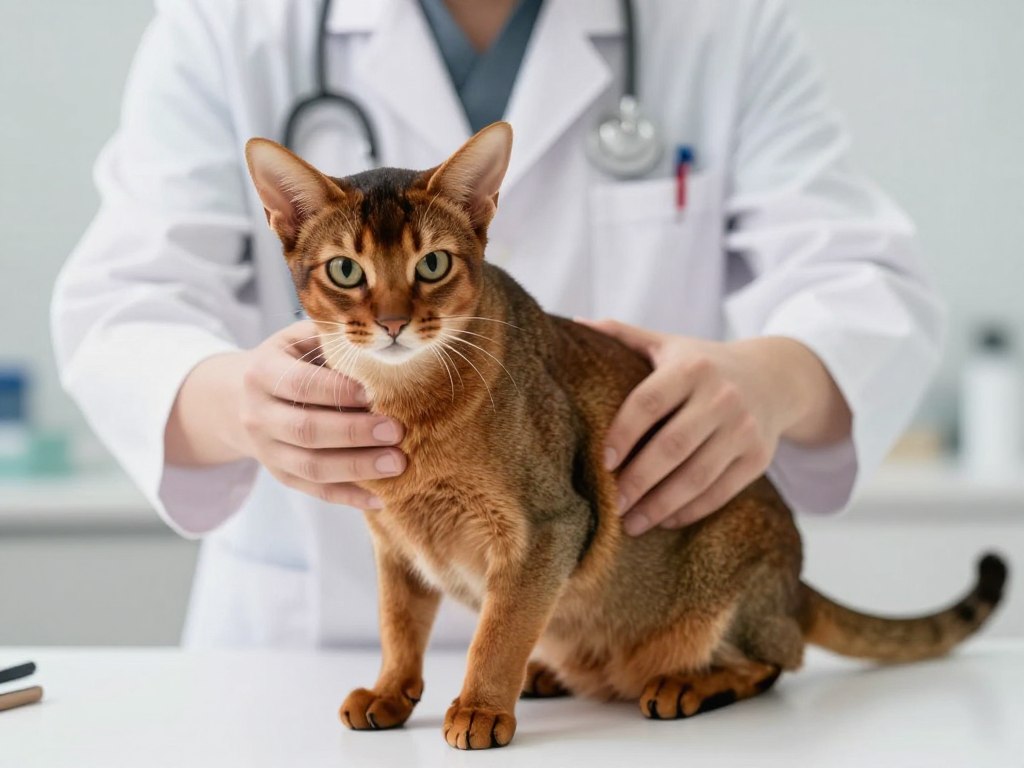
Abyssinian cats generally enjoy robust health with proper care. However, certain genetic conditions affect this breed more frequently. Awareness of potential health problems enables early detection and treatment.
Progressive Retinal Atrophy
Progressive retinal atrophy, commonly abbreviated as PRA, causes gradual vision loss. This inherited eye disease affects the retina’s light-receptor cells. The condition eventually leads to complete blindness in affected cats.
Symptoms typically appear between three and five years of age. Early signs include dilated pupils and night vision difficulties. Cats may bump into objects in dim lighting conditions.
Genetic testing identifies carriers before breeding occurs. Responsible breeders screen their cats for the PRA gene. No cure exists, but affected cats adapt well to vision loss.
Pyruvate Kinase Deficiency
Pyruvate kinase deficiency represents another genetic condition in Abyssinians. This enzyme deficiency affects red blood cell function. The disease causes anemia of varying severity levels.
Symptoms include lethargy, weakness, and pale gums. Some cats show no signs despite carrying the gene. Blood tests diagnose this condition accurately.
Treatment options depend on disease severity. Mild cases may require monitoring only. Severe anemia might need blood transfusions or other interventions.
Health Advantages
- Generally robust overall health
- Long average lifespan of 12-15 years
- Strong immune systems
- Good adaptation to indoor living
- Responsive to preventive care
Health Concerns
- Progressive retinal atrophy risk
- Pyruvate kinase deficiency possibility
- Renal amyloidosis susceptibility
- Dental disease tendency
- Potential for gingivitis
Renal Amyloidosis
Renal amyloidosis affects kidney function in some Abyssinian cats. Abnormal protein deposits accumulate in kidney tissues. This condition leads to progressive kidney disease over time.
Early symptoms include increased thirst and urination. Weight loss and decreased appetite may develop. Blood work and urinalysis help diagnose kidney problems.
Management focuses on supporting remaining kidney function. Special renal diets reduce kidney workload. Medications control secondary complications like high blood pressure.
Dental Disease Prevention
Abyssinians show increased susceptibility to dental problems. Gingivitis and periodontal disease develop without proper care. Bacteria from dental disease can affect other body systems.
Regular dental cleanings prevent serious complications. Home care including daily brushing reduces plaque buildup. Dental treats and toys provide additional protection between cleanings.
Regular Veterinary Care
Annual wellness examinations detect problems early. Senior cats benefit from twice-yearly checkups. Vaccinations protect against common feline diseases.
Blood work establishes baseline health values. Regular testing tracks changes over time. Early detection significantly improves treatment outcomes for most conditions.
Preventive Care Schedule
- Annual wellness examinations
- Vaccination updates as recommended
- Parasite prevention year-round
- Dental cleanings as needed
- Blood work for senior cats
- Weight monitoring at each visit
Connect with veterinarians experienced in Abyssinian breed-specific health needs. Schedule comprehensive wellness examinations to establish baseline health metrics.
Life Expectancy and Aging
Abyssinian cats typically live between twelve and fifteen years. Some individuals exceed this range with excellent care. Genetics and environmental factors influence longevity significantly.
Senior cats require adjusted care as they age. Dietary changes support aging organs and metabolism. More frequent veterinary monitoring catches age-related issues early.
Joint health becomes important in older Abyssinians. Supplements like glucosamine may benefit arthritic cats. Provide easy access to elevated perches and litter boxes.
Breeding Standards and Kitten Selection
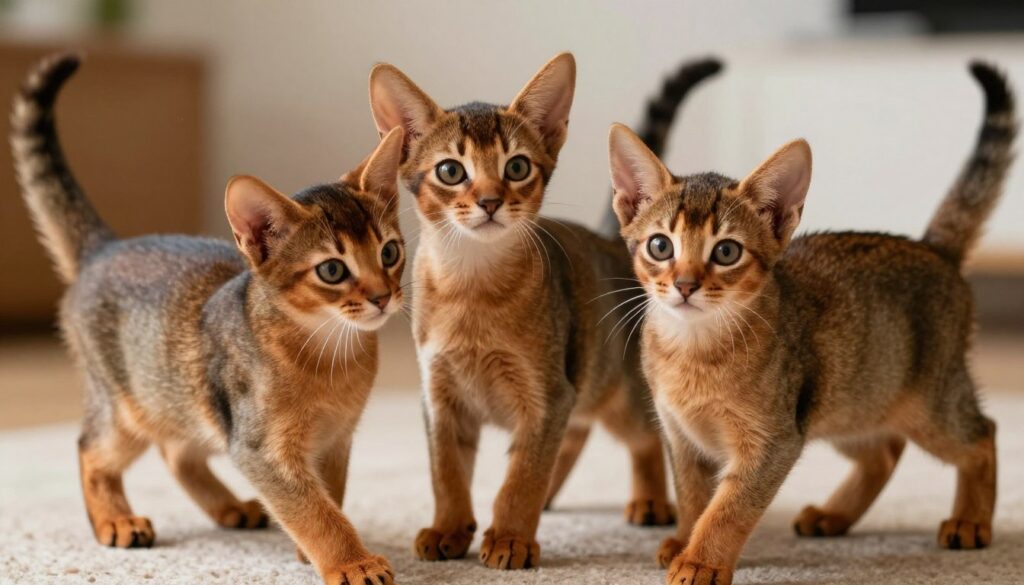
Selecting an Abyssinian kitten requires careful consideration and research. Reputable breeders prioritize health, temperament, and breed standards. Understanding what separates responsible breeding from poor practices protects future owners.
Finding Reputable Breeders
Quality breeders belong to recognized cat associations. They follow ethical breeding practices and health screening protocols. Visiting breeding facilities in person reveals crucial information about conditions.
Responsible breeders willingly answer questions about their program. They provide health documentation for breeding cats. Genetic testing results for PRA and pyruvate kinase should be available.
Good breeders match kittens to appropriate homes carefully. They ask questions about your lifestyle and experience. This ensures each kitten goes to a suitable environment.
Red Flags to Avoid
- Breeders unwilling to show breeding facilities
- No health guarantees or documentation provided
- Kittens available before eight weeks old
- Multiple breeds offered without specialization
- Pressure to purchase without consideration time
- Lack of questions about your home environment
Kitten Development and Socialization
Kittens should remain with mothers until at least twelve weeks old. This period supports critical social development. Early separation causes behavioral problems later in life.
Proper socialization includes handling by multiple people. Exposure to household sounds and activities prepares kittens. Well-socialized kittens adapt more easily to new homes.
Health Screening for Kittens
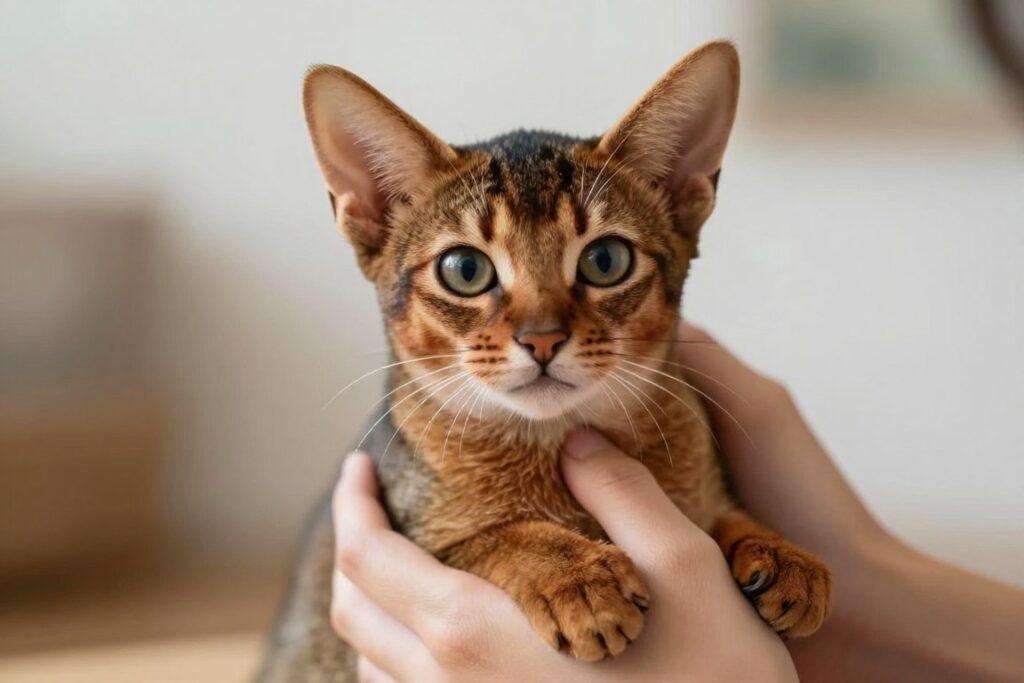
All kittens need veterinary examination before going home. Vaccinations should begin according to standard protocols. Deworming treatments eliminate common intestinal parasites.
Breeders provide health records documenting all veterinary care. These records guide future vaccination schedules. Any genetic test results should transfer to new owners.
What to Expect When Bringing Home an Abyssinian
Prepare your home before the kitten arrives. Set up a quiet room with all necessary supplies. This space serves as a safe introduction area.
Initial adjustment periods vary by individual kitten. Some adapt immediately while others need several days. Patience during this transition builds trust and confidence.
Essential Supplies Checklist
- High-quality kitten food
- Stainless steel food and water bowls
- Litter box and appropriate litter
- Scratching posts and cat tree
- Interactive toys for play
- Comfortable bedding
- Grooming supplies
First Week Care Guide
- Limit initial space for security
- Maintain consistent feeding schedule
- Schedule first vet appointment
- Begin gentle handling sessions
- Introduce family members gradually
- Establish routine patterns
- Monitor eating and litter habits
Training and Socialization
- Start litter training immediately
- Introduce scratching posts early
- Practice gentle handling daily
- Expose to household sounds
- Begin basic command training
- Establish play routines
- Create positive associations
Cost Considerations
Abyssinian kittens from reputable breeders typically cost between $900 and $1500. Show-quality cats may exceed this range significantly. Pet-quality cats usually cost less than breeding rights animals.
Initial setup expenses add to the kitten cost. Food, supplies, and veterinary care require ongoing budgeting. Annual costs for quality care typically range from $500 to $1000.
Emergency veterinary funds should be established early. Pet insurance may offset unexpected medical expenses. Compare policies carefully to understand coverage limitations.
Daily Life With an Abyssinian Cat
Living with an Abyssinian brings unique joys and challenges. These cats integrate themselves fully into family life. Understanding what to expect helps create harmonious households.
Activity Patterns and Daily Routine
Abyssinians maintain high activity levels throughout the day. They follow owners from room to room investigating activities. Expect active participation in household tasks and projects.
Morning routines often include enthusiastic greetings and demands for breakfast. These cats vocalize their needs without excessive meowing. Their internal clocks run precisely regarding meal times.
Evening hours bring peak activity periods for many Abyssinians. Playtime before bed helps burn excess energy. This routine promotes better sleep patterns for both cats and owners.
Space Requirements
Vertical space matters more than square footage for Abyssinians. They utilize wall-mounted shelves and tall furniture extensively. Creating climbing opportunities satisfies natural instincts.
Window access provides entertainment for indoor cats. Bird feeders positioned outside windows create cat television. Secure screens prevent accidental falls or escapes.
Interaction With Family Members
These cats typically select favorite family members while remaining friendly to all. They seek attention on their terms rather than constant lap sitting. Respect for their independence strengthens bonds.
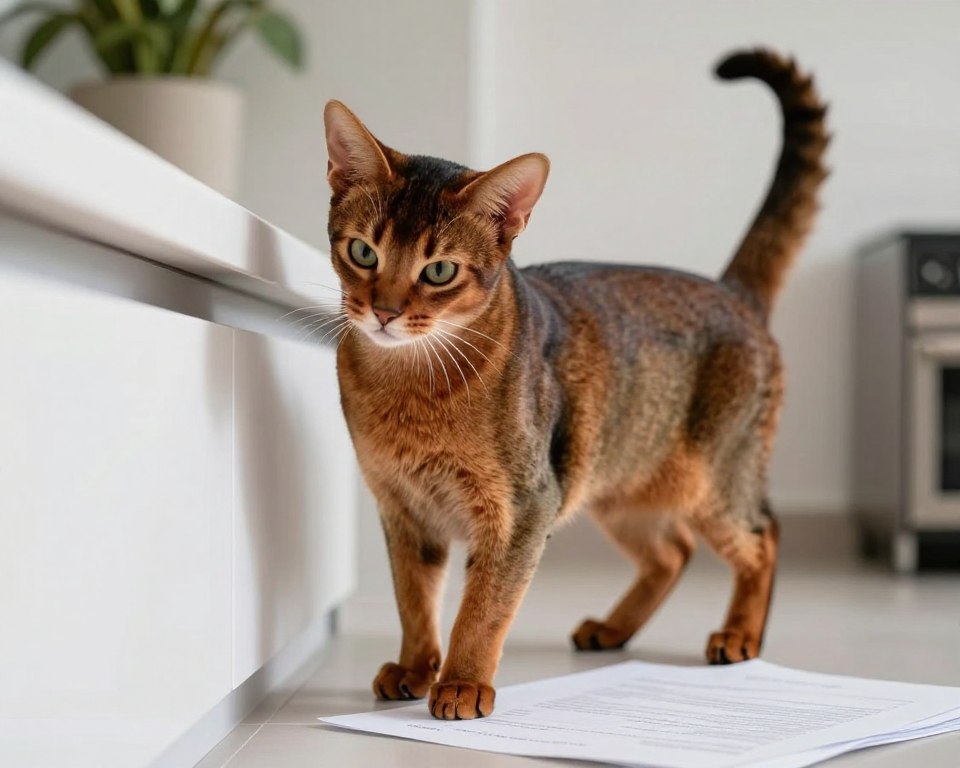
Work-from-home situations suit Abyssinians well. They enjoy company without requiring constant interaction. Expect keyboard walking and paper inspection during work hours.
Best Household Matches
- Active families with older children
- Experienced cat owners
- Work-from-home professionals
- Multi-pet households
- People seeking interactive pets
- Those with time for daily play
Challenging Situations
- Frequently empty homes
- Very young children without supervision
- Preference for sedentary cats
- Limited space without vertical options
- Desire for independent, aloof cats
- Inability to provide daily enrichment
Behavioral Considerations
Destructive behaviors emerge from insufficient stimulation. Bored Abyssinians may scratch furniture or knock items off surfaces. Providing appropriate outlets prevents these problems.
Counter surfing challenges many owners due to athletic abilities. Remove tempting items from counters and tables. Consistent training helps establish boundaries over time.
Travel and Boarding
Some Abyssinians adapt well to travel with proper preparation. Carrier training from kittenhood eases transportation stress. Short practice trips build positive associations.
Boarding facilities should offer individual attention and play time. In-home pet sitters often work better for this breed. Familiar environments reduce stress during owner absences.
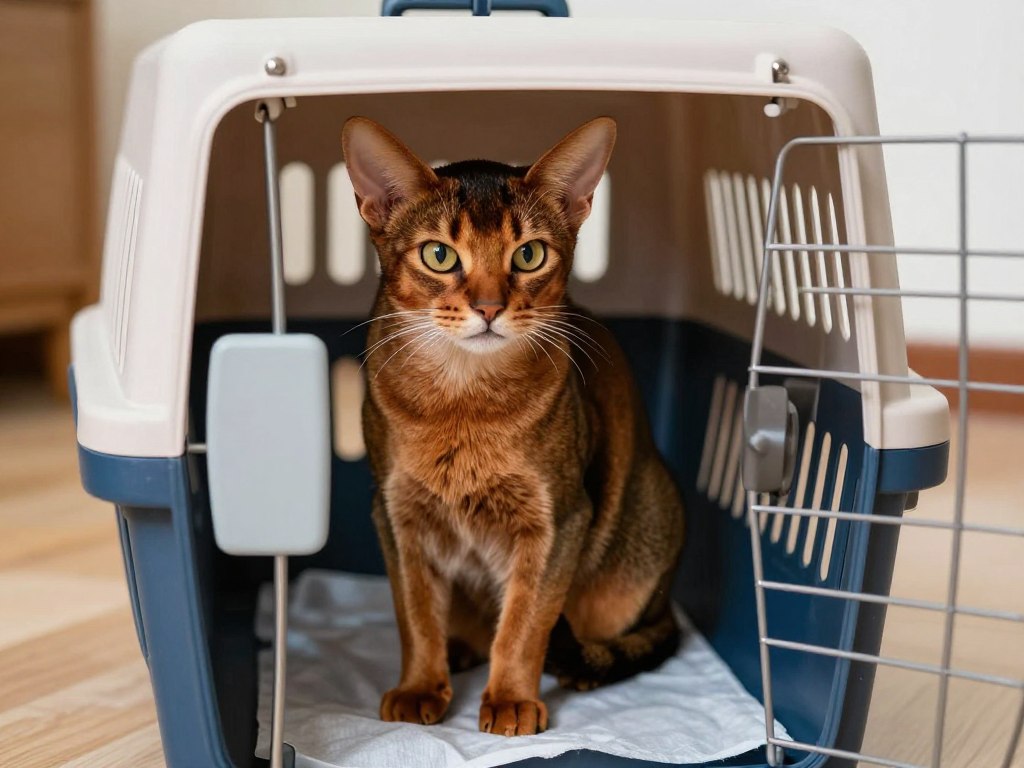
Long-term Commitment
Abyssinian ownership represents a twelve to fifteen year commitment minimum. Consider life changes that may occur during this timeframe. These cats form strong attachments and struggle with rehoming.
Senior Abyssinians maintain playful spirits longer than many breeds. Energy levels moderate with age but rarely disappear completely. Continued enrichment remains important throughout their life.
What Makes Abyssinians Unique Among Cat Breeds
Several characteristics distinguish Abyssinians from other cat breeds. Their combination of traits creates a distinctive feline personality. Understanding these unique qualities helps potential owners make informed decisions.
The Ticked Coat Pattern
No other domestic cat breed displays the Abyssinian’s specific ticking pattern. Each hair shaft contains multiple color bands creating depth. This pattern results from the agouti gene’s expression.
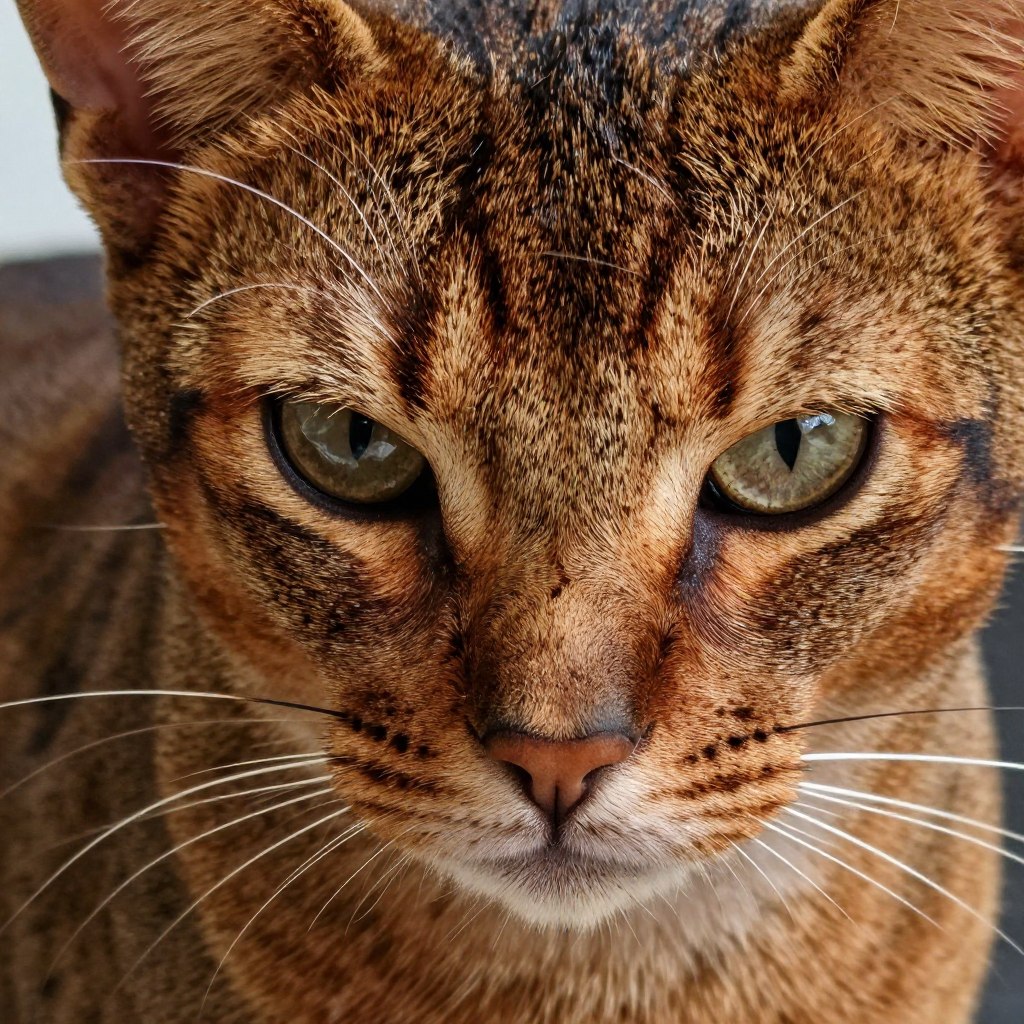
The coat catches and reflects light uniquely. Movement enhances the shimmering effect across the body. This appearance contributed significantly to the breed’s popularity.
Dog-Like Personality Traits
Abyssinian behavior often resembles canine companions more than typical cats. They follow owners around homes like devoted dogs. Their willingness to learn tricks and commands exceeds most feline breeds.
Fetch games appeal to many Abyssinians naturally. They retrieve thrown toys repeatedly without training. This behavior delights owners seeking interactive pet relationships.
Ancient Heritage
The Abyssinian breed carries an air of mystery and history. Their resemblance to ancient Egyptian cat depictions fascinates enthusiasts. This connection to antiquity adds to their appeal.
Genetic diversity within the breed supports overall health. Despite being one oldest recognized breeds, Abyssinians maintain robust constitutions. Responsible breeding preserves this genetic advantage.
Athletic Prowess
Few breeds match Abyssinian jumping and climbing abilities. They scale heights that surprise even experienced cat owners. This athleticism requires appropriate environmental accommodations.
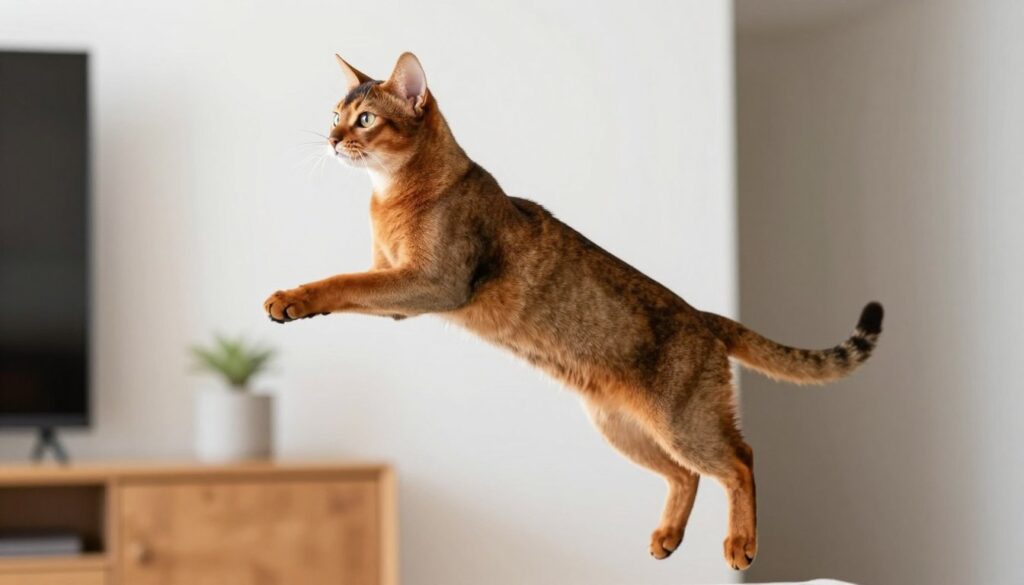
Their muscle tone and body structure support these athletic feats. The lean build maximizes agility without sacrificing strength. Regular exercise maintains their physical condition throughout life.
Intelligence and Problem-Solving
Abyssinians rank among the most intelligent cat breeds consistently. They observe and learn from watching humans. Problem-solving abilities manifest in surprising ways daily.
Owners report cats learning to open doors and cabinets. Some figure out puzzle toys immediately without trial and error. This intelligence requires mental stimulation to prevent boredom.
Social Nature
Unlike stereotypically aloof cats, Abyssinians crave social interaction. They initiate play and seek attention regularly. Their outgoing personality makes them excellent family cats.
Loneliness affects Abyssinians more than independent breeds. They thrive in households with frequent human presence. Multi-cat homes often work well providing companionship.
Training and Mental Enrichment Activities
Abyssinian intelligence makes them highly trainable cats. Mental stimulation ranks equally important as physical exercise. Implementing structured training and enrichment prevents behavioral problems.
Basic Command Training
Start training sessions when cats are young for best results. Positive reinforcement methods work exceptionally well. Use small, tasty treats to reward desired behaviors.
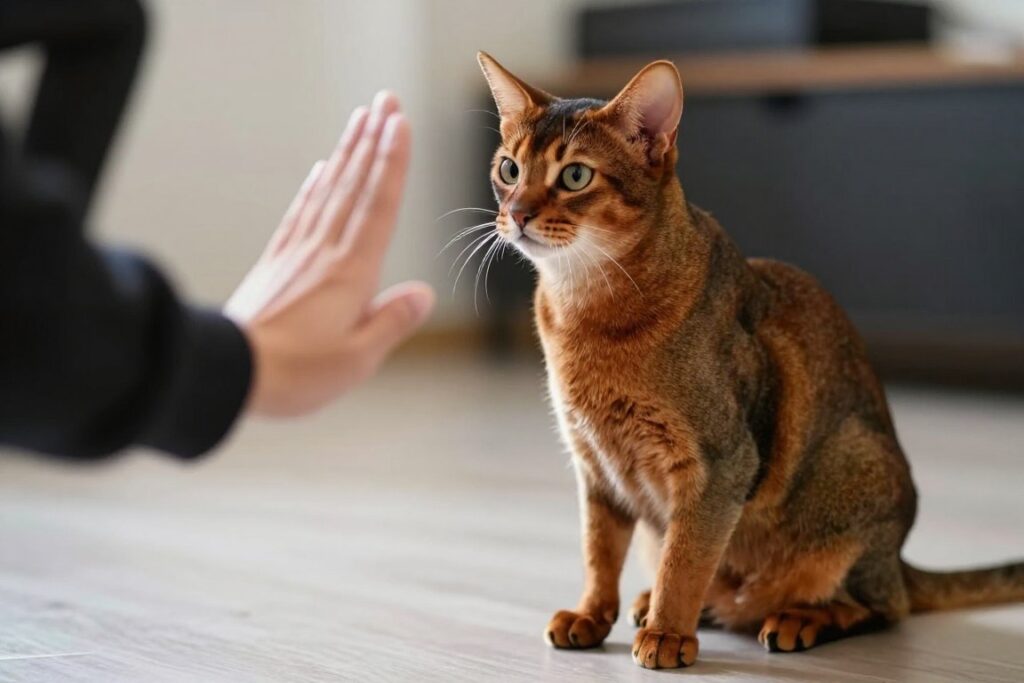
Teaching “sit” provides a foundation for other commands. Hold a treat above the cat’s head moving it backward. The cat naturally sits to track the treat movement.
Come when called ensures safety and convenience. Use a specific sound or word consistently. Reward immediately when the cat responds to build association.
Advanced Tricks
High-five and paw shakes impress visitors and provide bonding. Touch the cat’s paw gently while saying the command. Reward any paw movement initially, shaping behavior gradually.
Fetch training capitalizes on natural retrieve instincts. Start with favorite toys thrown short distances. Praise enthusiastically when the cat returns with the toy.
Enrichment Toys and Activities
Rotation of toys maintains novelty and interest. Keep some toys stored away, bringing them out periodically. This prevents boredom with the same items constantly.
Interactive Feeders
Puzzle feeders slow eating while engaging minds. These devices make cats work for their food. Various difficulty levels suit different skill levels.
Hunting Simulations
Feather wands mimic prey movement perfectly. Vary speed and direction during play. Allow catches periodically to maintain interest.
Electronic Toys
Automated toys provide entertainment when owners are busy. Motion-activated mice and laser patterns engage natural instincts. Supervise initial use for safety.
DIY Enrichment Ideas
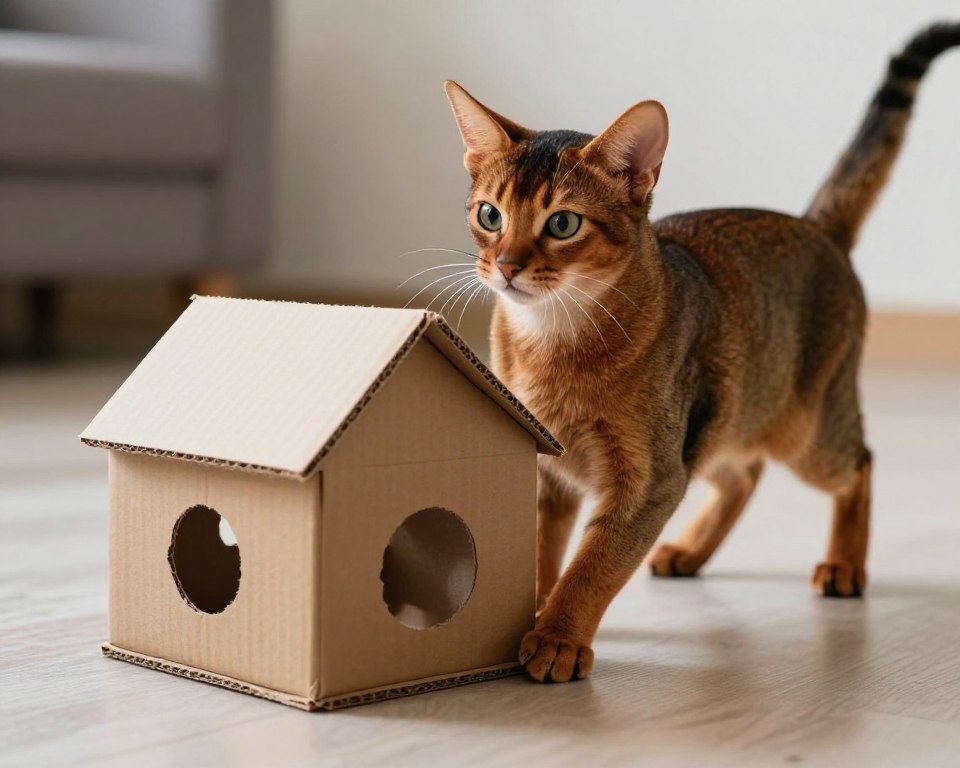
Cardboard boxes provide endless entertainment inexpensively. Cut holes for entry and exit points. Add crinkly paper inside for additional interest.
Paper bags without handles create safe exploration opportunities. Cats enjoy the sounds and hiding spots. Remove any potentially dangerous materials first.
Clicker Training Basics
Clicker training offers precise timing for behavior marking. The click sound bridges the gap between action and reward. This method accelerates learning significantly.
Charge the clicker by pairing clicks with treats initially. Once the cat associates clicks with rewards, shape complex behaviors. Break tricks into small steps rewarding progress.
Harness Training for Outdoor Exploration
Harness training expands enrichment possibilities safely. Start by leaving the harness near the cat’s food. Gradually progress to placing it on for short periods.
Initial outdoor experiences should occur in quiet, secure areas. Let the cat set the pace for exploration. Some Abyssinians take to leash walking enthusiastically while others prefer supervised yard time.
Join the Abyssinian Owner Community
Connect with experienced Abyssinian owners to share training tips, enrichment ideas, and breed-specific advice. Access exclusive resources and participate in breed-focused discussions.
Common Myths and Facts About Abyssinian Cats
Misconceptions about Abyssinians circulate among potential owners. Separating fact from fiction helps set realistic expectations. Understanding the truth about this breed ensures better preparation.
Myth: Abyssinians Are Hypoallergenic
No cat breed is truly hypoallergenic despite marketing claims. Abyssinians produce the Fel d 1 protein causing allergic reactions. Their short coat may produce less dander than long-haired breeds.
Regular grooming and cleaning reduce allergen levels in homes. HEPA filters help capture airborne particles. Allergy sufferers should spend time with the breed before committing.
Myth: They Require Minimal Attention
Some assume short coats mean low-maintenance cats. Abyssinians actually demand substantial time and interaction. Their social nature and energy levels require daily engagement.
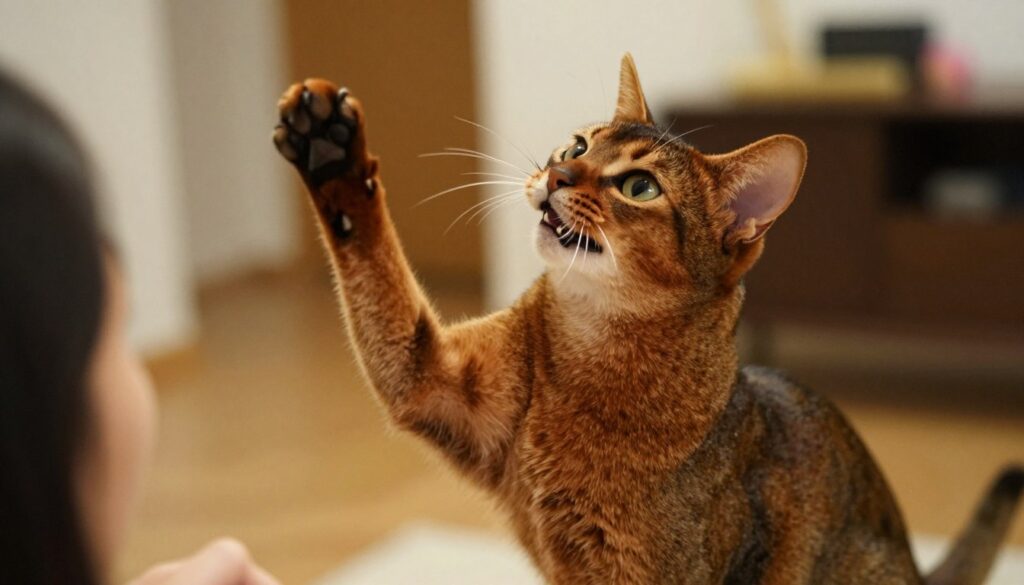
Neglected Abyssinians develop behavioral problems quickly. They thrive with involved, active owners. Consider lifestyle compatibility carefully before choosing this breed.
Fact: They Excel in Multi-Pet Homes
Contrary to beliefs about territorial cats, Abyssinians often enjoy feline companions. Their social nature extends to other animals with proper introductions. Many breeders recommend adopting pairs for companionship.
Dogs and Abyssinians can form strong friendships. The cat’s confidence helps establish positive relationships. Supervision during initial interactions ensures safety for all pets.
Myth: Abyssinians Are Wild or Aggressive
Their wild appearance leads to assumptions about temperament. Abyssinians are actually quite gentle and affectionate. Properly socialized cats rarely display aggression toward humans.
High energy differs from aggression or wildness. These cats play enthusiastically without malicious intent. Teaching gentle play prevents accidental scratches during excitement.
Fact: They Need More Than Standard Cat Care
Basic food, water, and litter box maintenance proves insufficient. Abyssinians require environmental enrichment and interaction. Mental stimulation prevents destructive boredom behaviors.
Budget extra time daily for play and training. These cats reward invested effort with loyal companionship. Their needs exceed those of more independent breeds.
Abyssinians can work for first-time owners willing to meet their needs. Their demanding nature requires research and commitment. Experience with pets generally helps but isn’t mandatory. Understanding breed requirements before adoption ensures success.
These cats typically enjoy respectful children’s company. Their playful nature matches energetic kids well. Teach children appropriate handling and interaction methods. Supervision prevents rough play that might stress the cat.
Plan for at least thirty to forty-five minutes of active play daily. This can be divided into multiple sessions throughout the day. Provide additional environmental enrichment for independent activity. Insufficient exercise leads to behavioral problems.
Most Abyssinians coexist well with other feline companions. Proper introductions ensure positive relationships. Many thrive with a same-breed companion for play. Their social nature makes them less territorial than some breeds.
Abyssinian Compared to Similar Cat Breeds
Understanding how Abyssinians differ from similar breeds helps potential owners. Several breeds share characteristics but vary in important ways. Comparison clarifies which breed best matches individual preferences.
Abyssinian vs. Somali Cats
Somali cats represent the long-haired version of Abyssinians. They share the same body type, personality, and ticked coat. The primary difference lies in coat length and grooming needs.
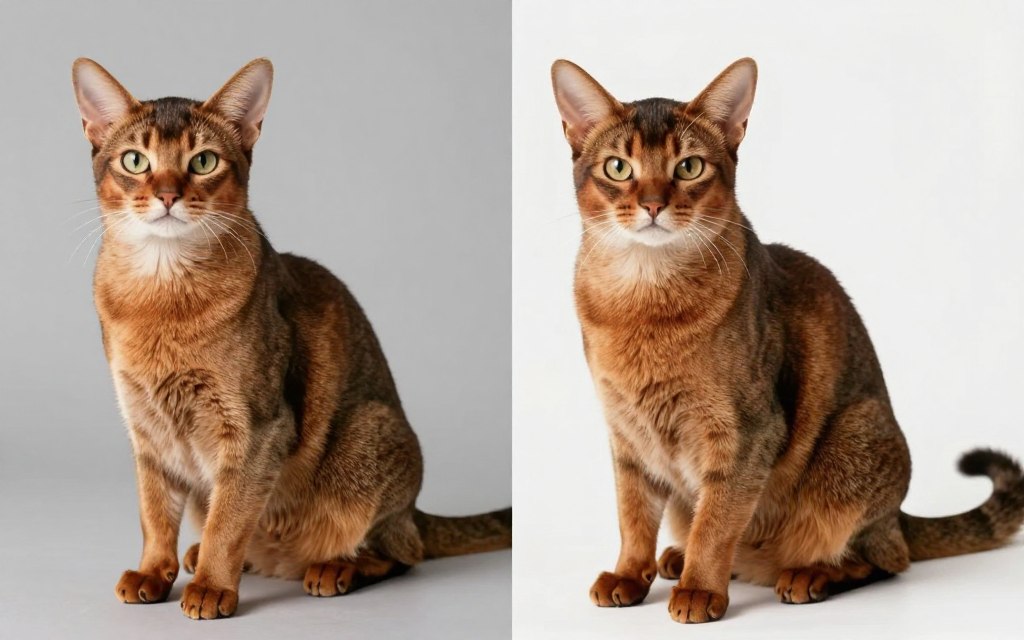
Somalis require more frequent grooming to prevent matting. Their fluffy coats shed more noticeably than Abyssinian fur. Both breeds share identical activity levels and social needs.
Abyssinian vs. Oriental Shorthair
Oriental Shorthairs match Abyssinian energy and intelligence. Both breeds demand substantial attention and interaction. However, body types and coat patterns differ significantly.
Orientals display more varied coat colors and patterns. Their wedge-shaped faces appear more extreme than Abyssinian features. Vocal tendencies run stronger in Oriental Shorthairs typically.
Abyssinian vs. Bengal Cats
Bengal cats share the Abyssinian’s active, athletic nature. Both breeds require extensive enrichment and exercise. Bengals display spotted or marbled coats unlike Abyssinian ticking.
Bengals often exhibit stronger hunting drives and wild behaviors. Their larger size impacts space requirements and food costs. Abyssinians generally adapt better to apartment living.
| Characteristic | Abyssinian | Somali | Oriental Shorthair | Bengal |
| Coat Length | Short | Long | Short | Short |
| Activity Level | Very High | Very High | Very High | Extremely High |
| Grooming Needs | Low | Moderate | Low | Low |
| Vocalization | Quiet | Quiet | Very Vocal | Moderate |
| Size | Medium | Medium | Medium | Medium-Large |
| Best For | Active families | Active families who like grooming | Those who enjoy talkative cats | Experienced owners with space |
Choosing the Right Breed for Your Lifestyle
Assess your daily schedule and energy levels honestly. Abyssinians suit active individuals with time for interaction. More independent breeds better serve frequently absent owners.
Consider grooming preferences when comparing similar breeds. Short-coated Abyssinians simplify maintenance compared to long-haired alternatives. However, their other needs remain substantial.
Noise tolerance matters for apartment dwellers particularly. Abyssinians’ quiet nature works well in close quarters. More vocal breeds may disturb neighbors or family members.
Abyssinians in Cat Shows and Competitions
The Abyssinian breed excels in competitive cat show environments. Their striking appearance and confident demeanor appeal to judges. Understanding show standards helps appreciate breed excellence.
Show Quality Standards
Cat show judges evaluate multiple aspects of appearance and temperament. The ticked coat must display even coloring without patches. Darker dorsal shading should extend from head to tail tip.
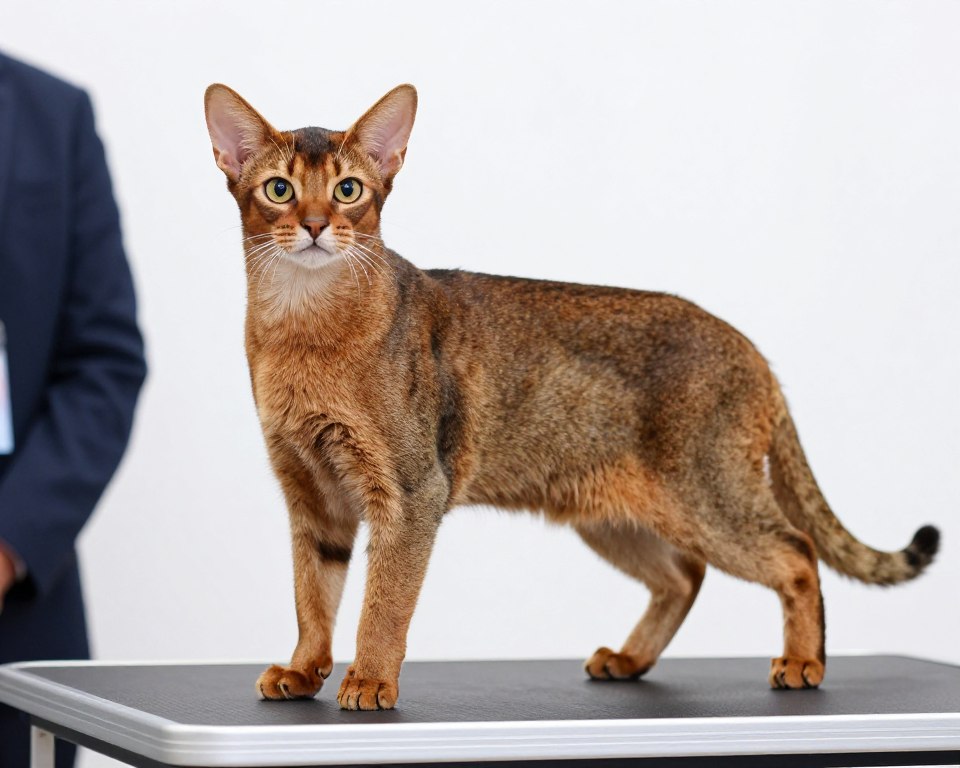
Body structure follows specific proportions and muscular definition. Legs and tail maintain appropriate length relative to torso. Overall balance and grace factor into judging decisions.
Eyes should display rich gold or green coloring with good depth. Large, alert ears set wide on the head contribute to scoring. Facial markings include the characteristic dark eye liner effect.
Temperament in Show Environments
Show cats must tolerate handling by strangers calmly. Judges examine cats thoroughly during evaluation. Well-socialized Abyssinians typically handle this attention comfortably.
Their naturally confident personality suits competitive environments. Many Abyssinians seem to enjoy the attention and stimulation. Proper preparation ensures positive show experiences.
Preparing for Cat Shows
Regular grooming maintains coat condition between shows. Bathing may be necessary to remove oils and enhance ticking. Nail trimming prevents accidental scratches during handling.
Practice handling sessions prepare cats for judging procedures. Expose show prospects to various people and situations. This socialization builds confidence in show ring environments.
Show Categories and Titles
Cats compete in age and achievement-based categories. Kittens, adults, and altered cats enter separate divisions. Championship, premiership, and grand championships represent progressive titles.
Regional and national wins contribute to prestigious titles. Some dedicated breeders campaign cats across multiple shows. Success requires commitment to travel and competition schedules.
Explore Cat Show Opportunities
Interested in showing your Abyssinian or attending cat shows to learn about the breed? Find upcoming cat show events in your region and connect with the show community.
Benefits Beyond Competition
Cat shows provide networking opportunities with breeders and enthusiasts. Educational seminars at events increase breed knowledge. Even non-competitors enjoy attending as spectators.
Showing celebrates breed preservation and improvement efforts. It encourages maintenance of breed standards across generations. The community aspect fosters friendships among cat lovers.
Is an Abyssinian Cat Right for You?
Abyssinian cats offer rewarding companionship for the right owners. Their unique combination of beauty, intelligence, and personality creates devoted fans. However, their demanding nature requires honest lifestyle assessment.
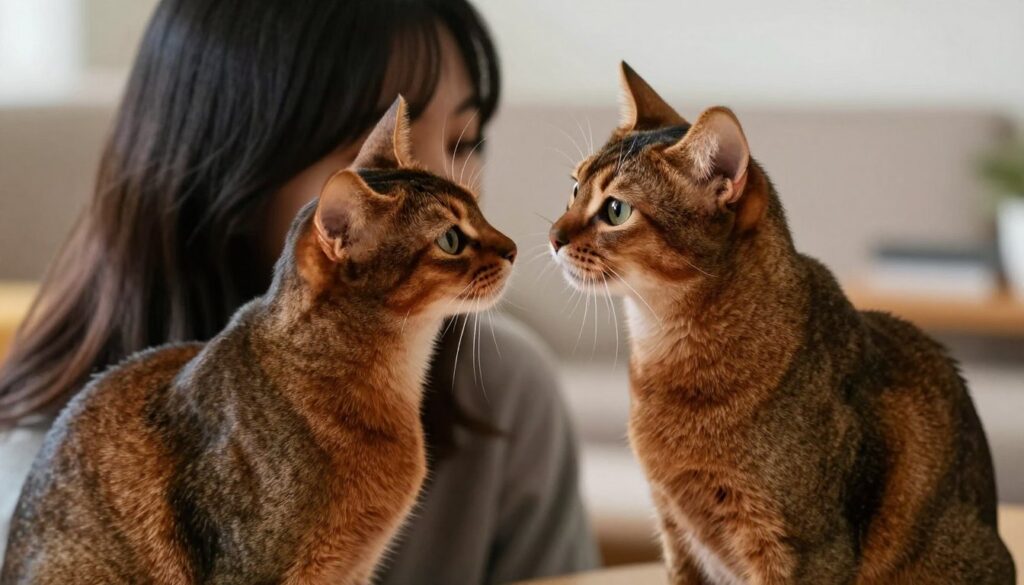
Consider your available time for daily interaction and play. These cats thrive with engaged owners who appreciate active pets. Insufficient attention leads to behavioral problems and unhappiness.
Evaluate your living space and environmental enrichment options. Vertical climbing opportunities matter more than square footage. Ensure you can provide appropriate outlets for their athletic abilities.
Making the Commitment
Abyssinian ownership spans twelve to fifteen years minimum. This long-term commitment requires financial and time resources. Veterinary care, quality food, and supplies represent ongoing expenses.
Research thoroughly before bringing an Abyssinian home. Visit breeders and interact with adult cats when possible. This firsthand experience reveals whether the breed matches your expectations.
Connect with current Abyssinian owners for realistic insights. Online communities and local cat clubs provide valuable perspectives. Their experiences help inform your decision process.
Rewards of Abyssinian Ownership
The bond formed with an Abyssinian creates unique rewards. Their dog-like loyalty and interactive nature bring daily joy. Many owners describe them as family members rather than merely pets.
Their intelligence keeps life interesting and entertaining. Problem-solving abilities and trainability offer engaging interactions. Each cat displays individual personality quirks adding character to households.
Physical beauty combined with graceful movement provides constant visual appeal. The shimmering ticked coat never fails to impress visitors. Their presence elevates the aesthetic of any home.
Ready to Welcome an Abyssinian Into Your Life?
Take the next step toward Abyssinian ownership with confidence. Connect with reputable breeders, schedule veterinary consultations, and join the community of devoted Abyssinian enthusiasts. Your journey to finding the perfect feline companion starts here.
Whether you seek an active companion, an intelligent pet, or a beautiful addition to your family, Abyssinians deliver on all fronts. Their ancient heritage combined with modern breeding creates healthy, vibrant cats. With proper care and attention, these remarkable felines become irreplaceable family members.
The decision to adopt any pet deserves careful consideration. Abyssinians particularly require owners ready to meet their unique needs. For those prepared to provide appropriate care, few breeds offer such rewarding companionship.
Leave a Reply